

By Remy
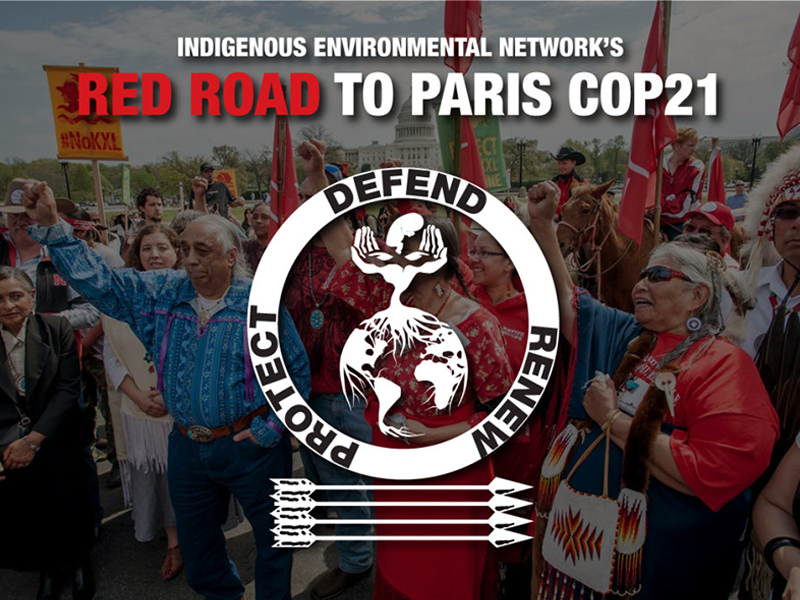
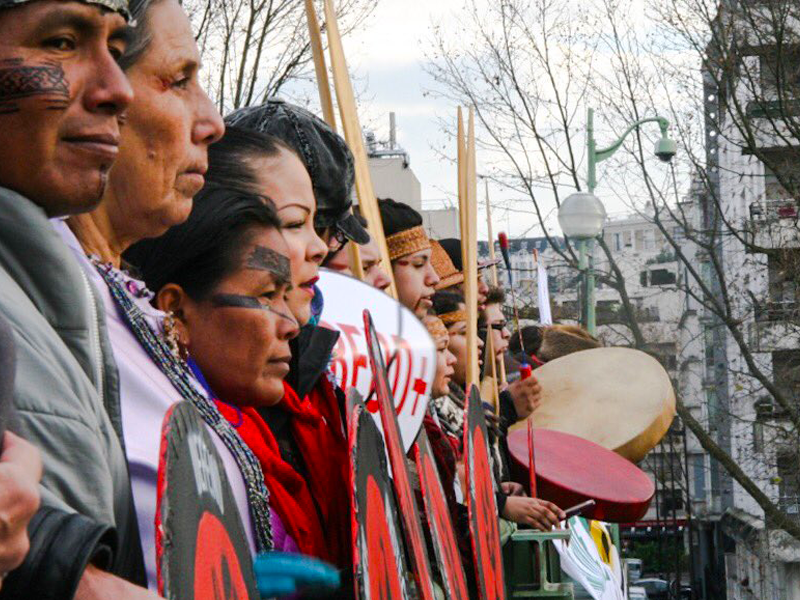
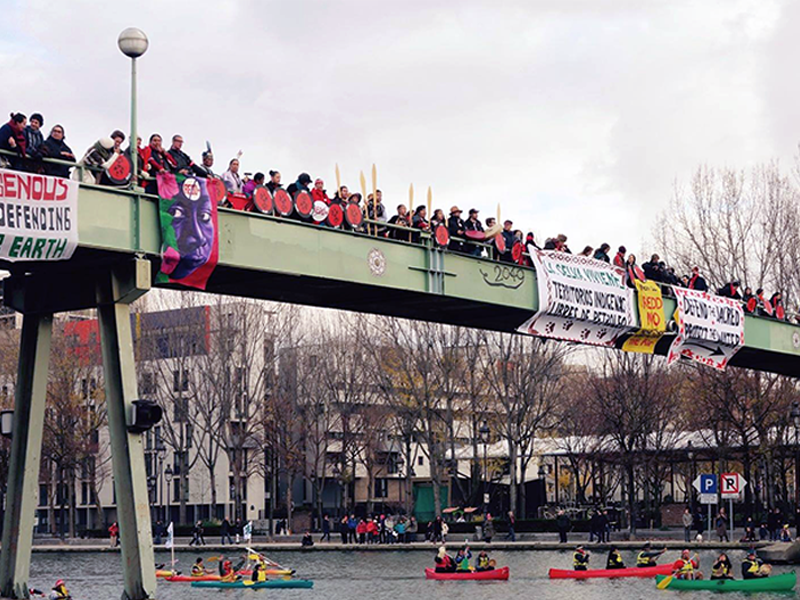
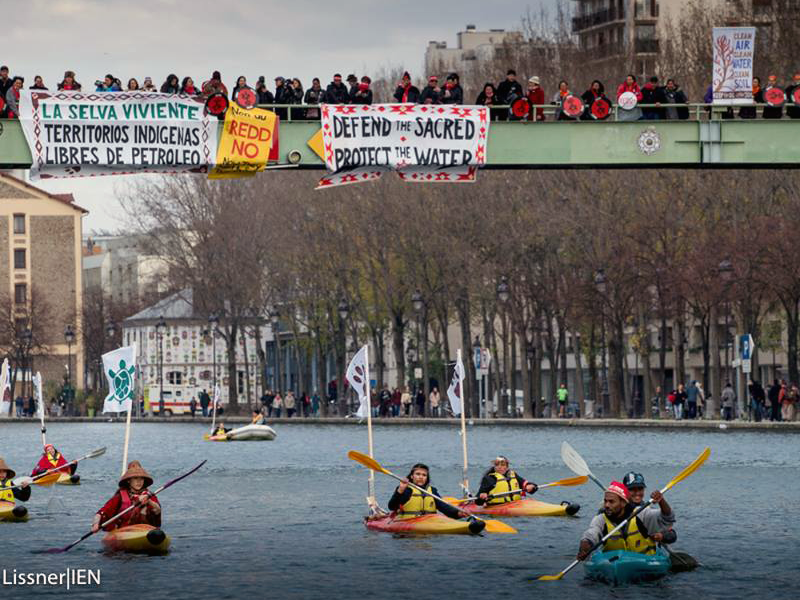
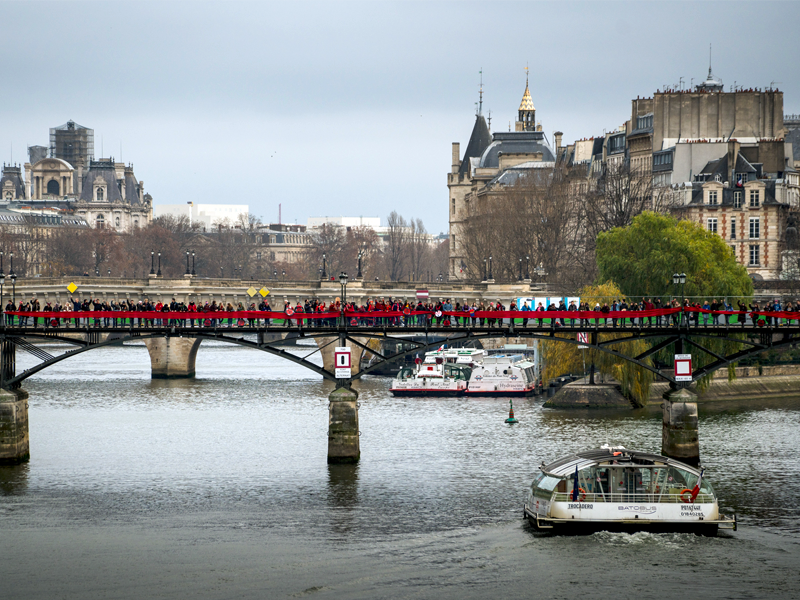
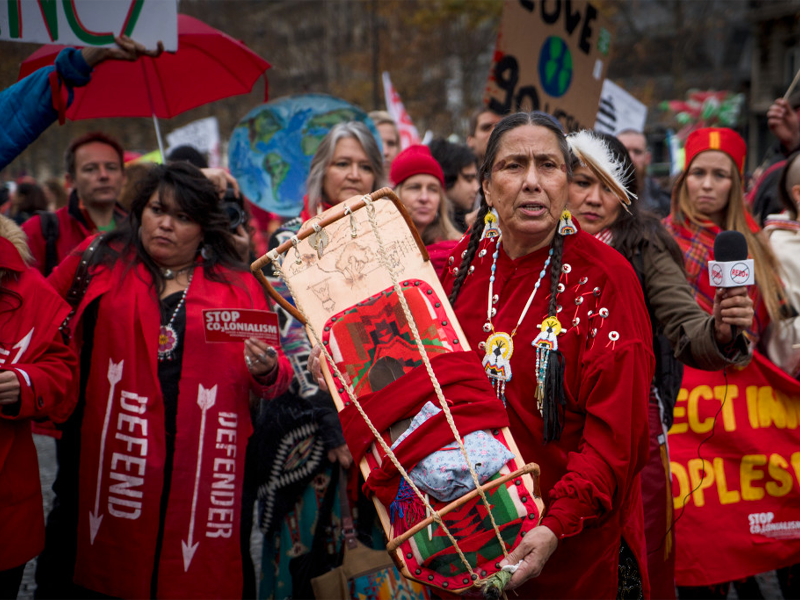
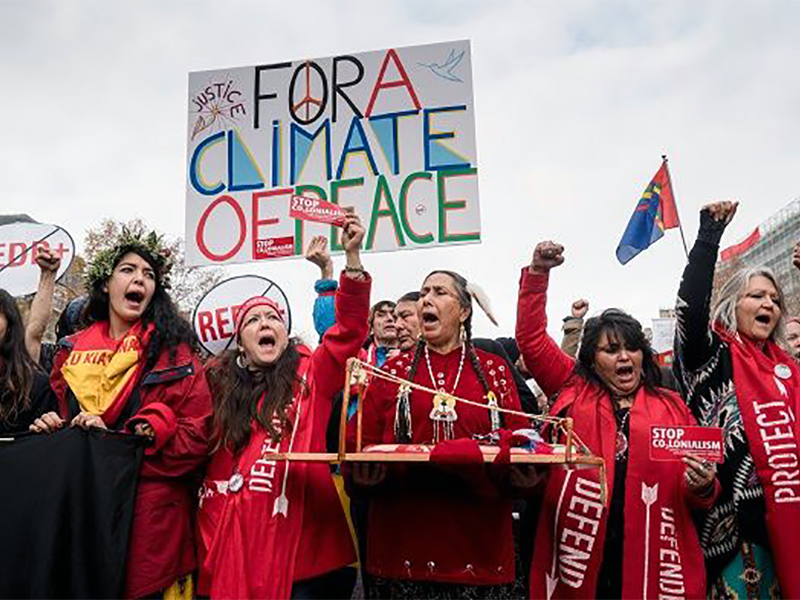
Based on previous work making Lozen Shields for the Apache Stronghold in Washington D.C., I was asked by native nonprofits to create a shield to represent Indigenous People globally for COP21 in Paris. This was the second global mass mobilization art campaign I’ve worked on, the first being The People’s Climate March in New York in 2014.
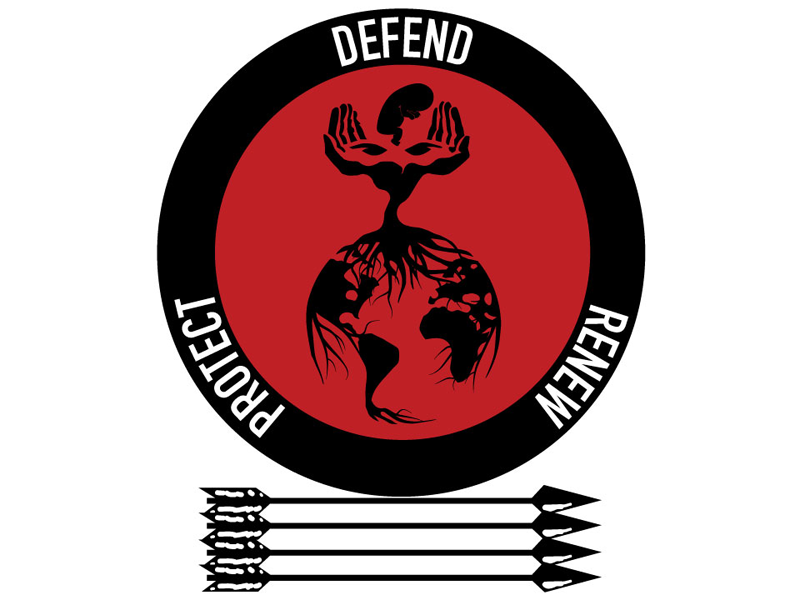
The parameters of the project given to me were to collaboratively create a shield building off a previous image to represent the Indigenous People around the world. The sketches I created incorporated The Tree of Life concept with a complex cultural global root structure branching through different continents. The eyes of our ancestors were also represented which look to protect the future generations who are at the heart of any Indigenous Movement.
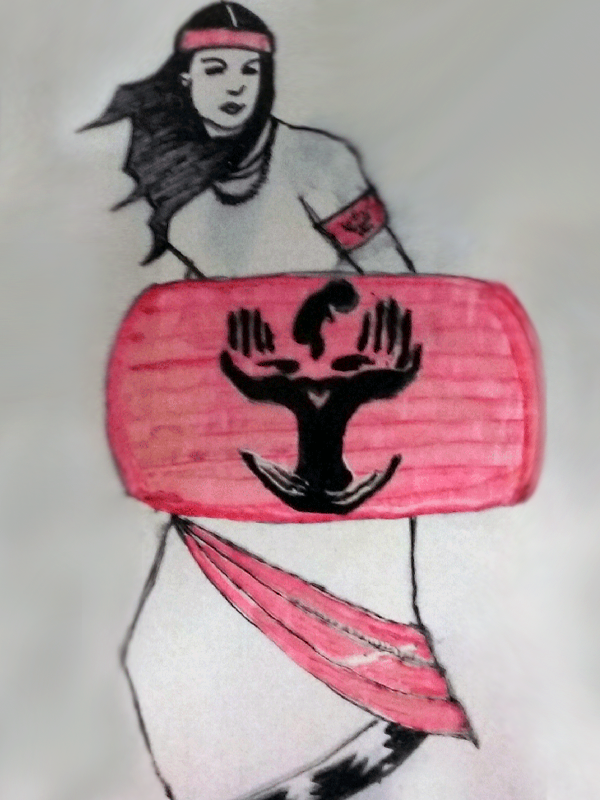
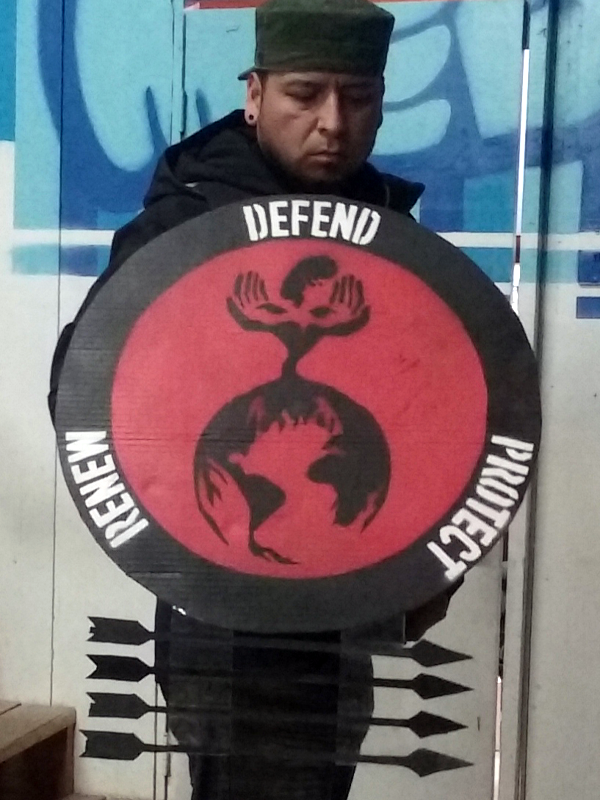
COP21 Indigenous Shield Sketches and Prototype
This design was supposed to be for all Indigenous people and organizations to use at COP21 and beyond. However, this was not the intention of the Indigenous Environmental Network who branded the design for themselves unbeknownst to myself and others like the Earth Guardians.
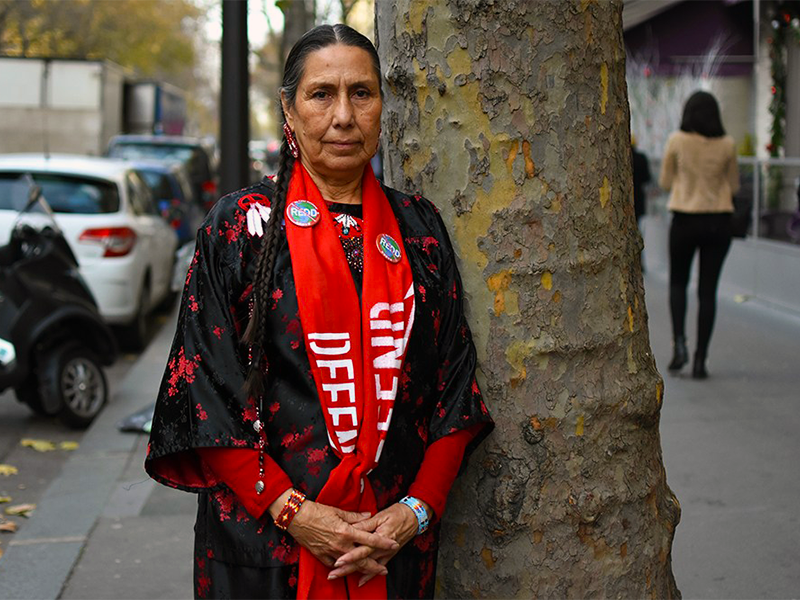
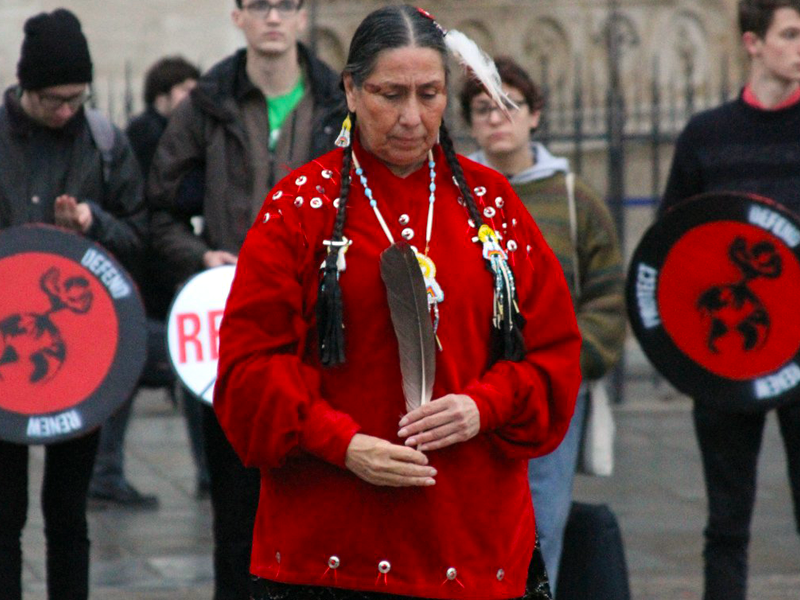
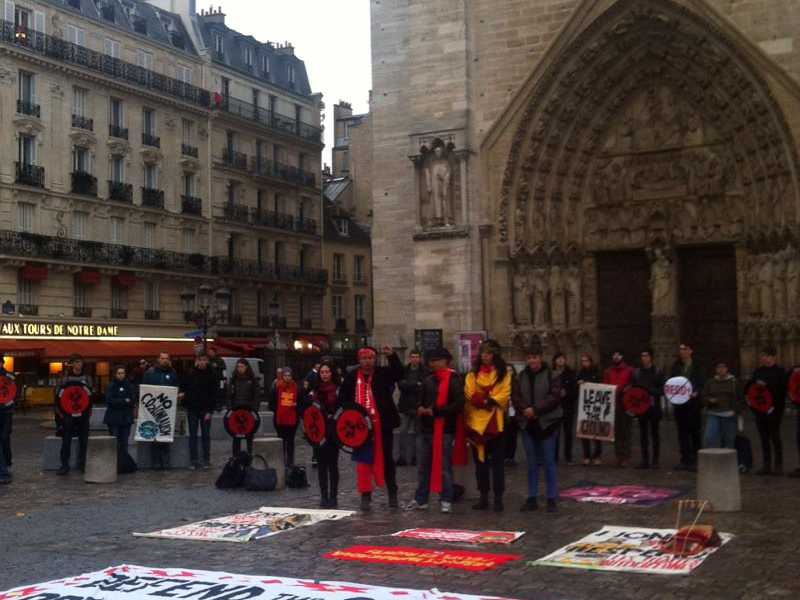
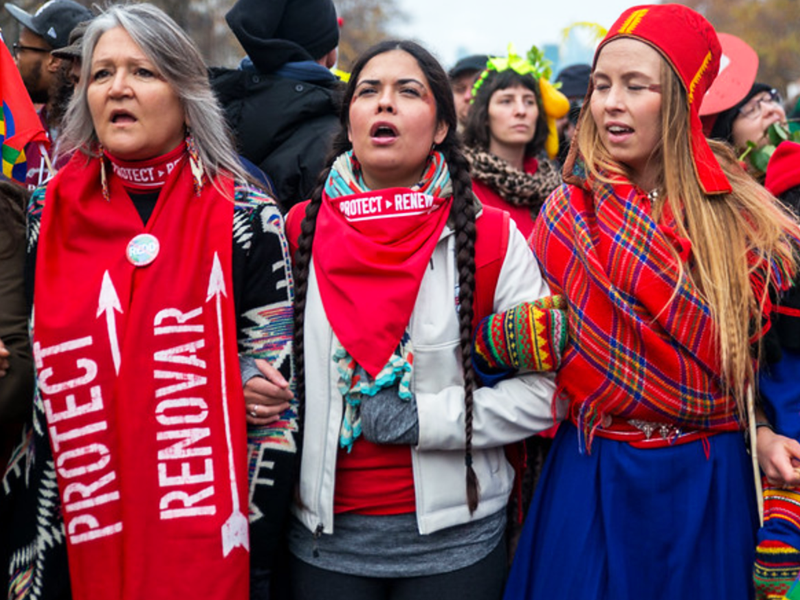
We would be engaging in direct actions at Parisian colonial religious sites so I created our own stoles with the multi-language messaging of, “Defend, Protect and Renew” stenciled upon them. This three-word messaging style would go on to be boringly regurgitated in future native campaign messaging.
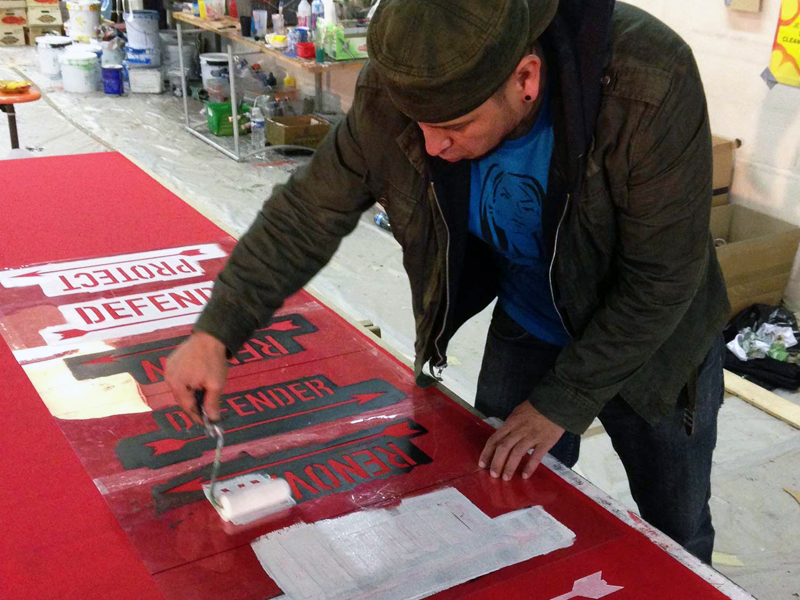
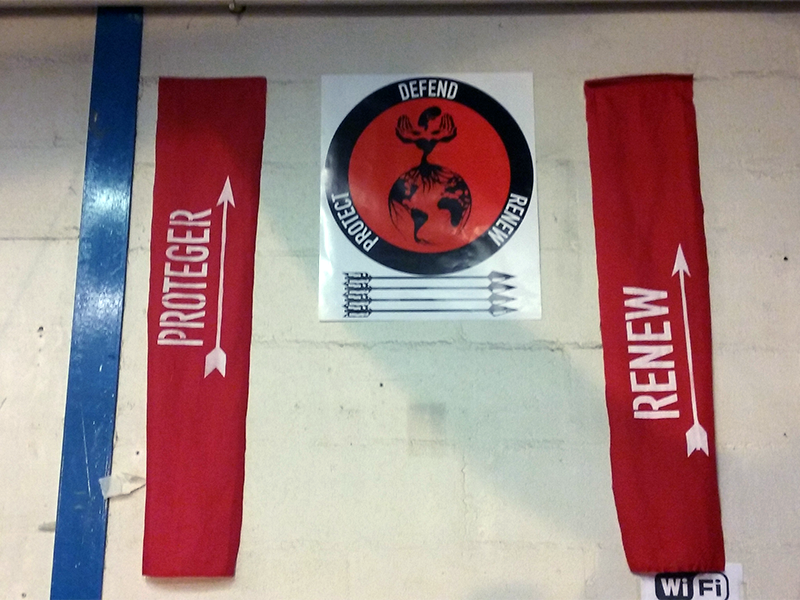
During the lead-up to Paris, there were many organizing and shield design refinement calls with IEN and IP3. It was agreed upon to use a large “slush fund” these nonprofits acquired to pay for my work and travel to Paris. Thinking these were trusted national organizations, upon their request, I submitted instructions to re-create my shields before securing my bag and travel to Paris. Shortly after sending the necessary information to re-create my work, their slush fund “dried up”. This entire experience with native nonprofits would reinforce the saying, all skin folk, ain’t kinfolk.
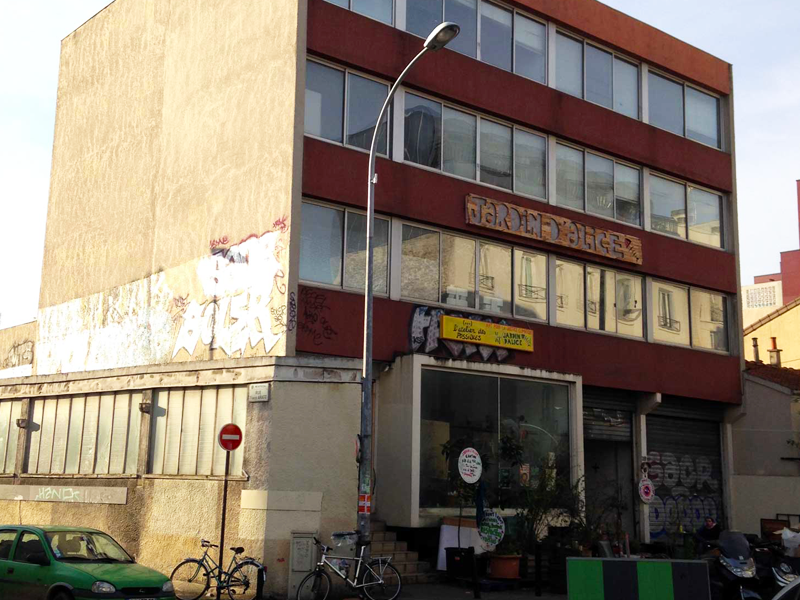
I managed to find my own way to Paris and arrived at the artspace. Unfazed by jetlag, I began creating shields and sashes immediately. Not having anywhere to stay, I stacked cardboard in a cold wet basement below the art space at Jardin D’Alice. This was the setup until making a few local English-speaking friends. Many thanks to those Parisians. Artists from reservations are used to creating under extreme conditions. What can’t be prepared for is being caught up in the lateral oppression and outright narcissism these events provide gate-keeping native nonprofits and their compliance and enforcement of a white good ol’ boys network.
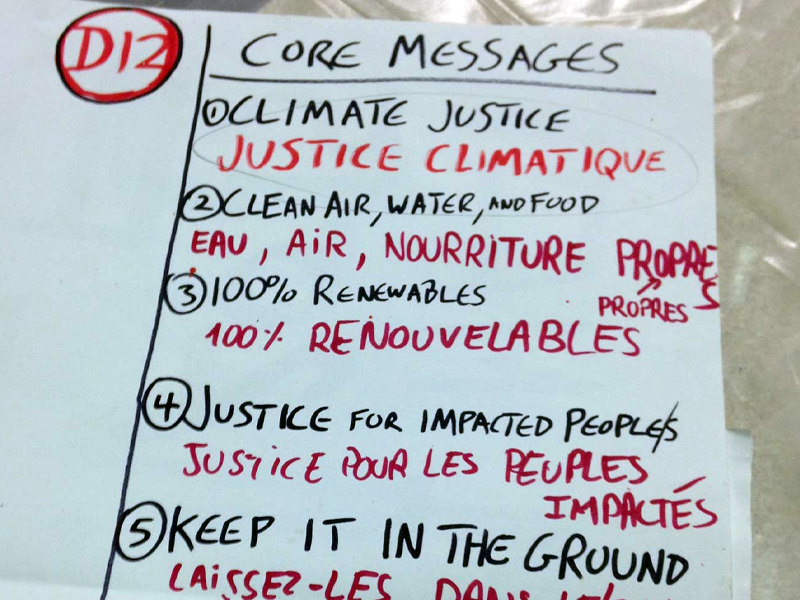
Had it not been for a couple of Indigenous artists that showed up in Paris, the entirety of Indigenous art for this global gathering would have been made by white artists backed by white NGOs. These mobilizations are full of watered-down taglines like 350.org’s “Keep It In The Ground” which was already being endlessly droned to Indigenous grassroots attendees to use in front of the cameras.
This hierarchical racist dynamic became contentious when white NGO contractors thought their input should supersede the knowledge of native artists creating for their own people. So called radical native nonprofits would of course side with the white organizations that fund them further exposing their fakery and fuckery.
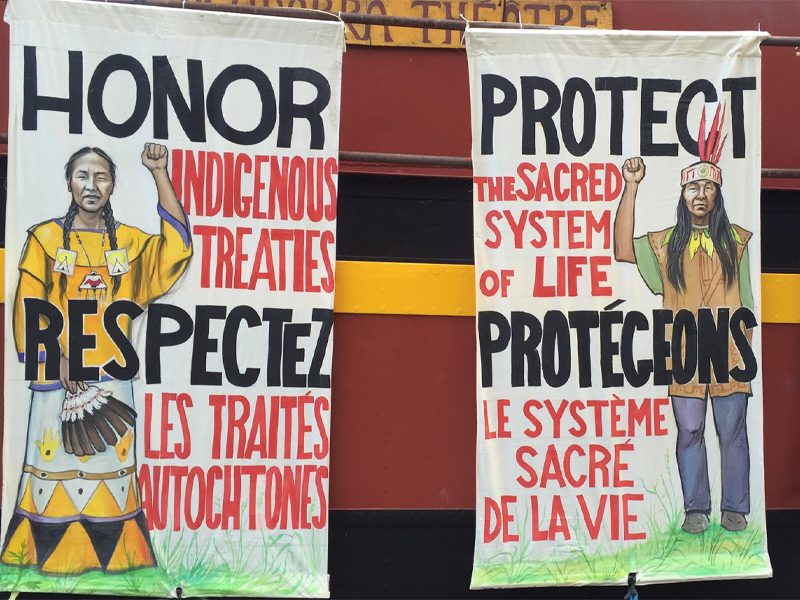
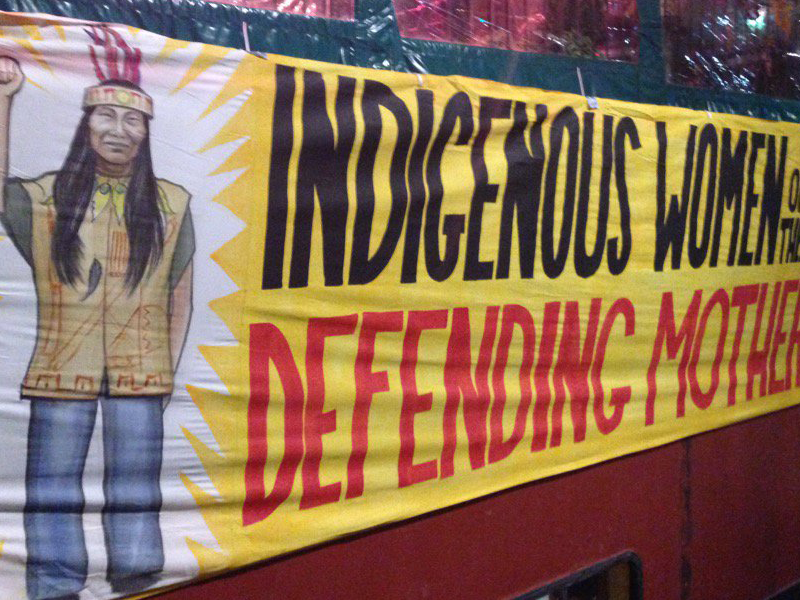
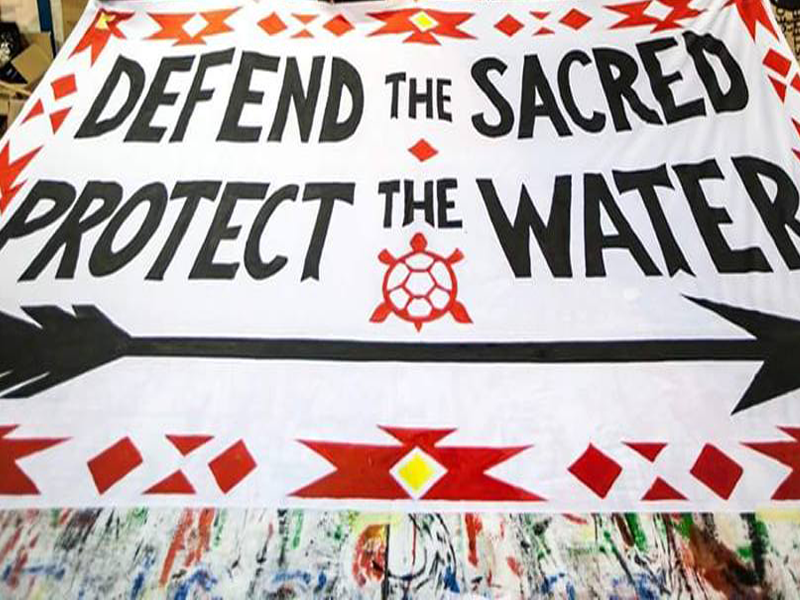
European influence was present when it was decided by large NGOs like 350.org that COP21 should be themed “Redlines“. This campaign obviously didn’t include input from BIPOC communities across US cities.
Redlines are what destroy developing communities of color in cities across North America. Redlining’s racist forms include blocking access to capital, proper education, government financing for homeownership and redistricting of communities of color for political and capitalist purposes. Native 501c3s attending COP21 as guests of white environmental nonprofits would once again acquiesce and clumsily attempt to adjust their own campaigns to accommodate the “Redline” language without challenge, just like The People’s Climate March.
For those that aren’t familiar with COP global gatherings, they extract and consume two valuable resources – huge amounts of fossil fuels to attend and also the time that grassroots waste being away from their struggle at home. However, to nonprofits, this whole extractive process provides a huge branding opportunity for their future funding.
The politicians and CEOs who are targeted by these 501c3s all fly private jets to COP and are always insulated by multiple layers of security so there is never any threat to their power. These targeted individuals only hold office for a few years so making appearances and promises at this annual expo are just a part of a capitalist colonial charade that the nonprofits and personalities participate in together.
Consequences are a major factor that affect challenging power directly at COP. Risking long-term incarceration with the potential of mistreatment in a foreign country that has just been embarrassed isn’t appealing. Therefore these so-called “demonstrations” will be relegated to free speech zones and not risk much more than waving a branded banner in a permitted parade. Something else to consider is when frontline communities plead our cases at COP, who enforces the penalties to these corporate polluters and their enablers within our local and national governments?
Flying across the world every year with a huge contingent to clout-chase while doing the bare minimum is not sustainable for the movement and only contributes to greenhouse gasses. Let us all be honest, no matter how poignant or beautiful a banner is, no politician or CEO has ever changed because of reading one. True warriors know that we will never banner-drop or vote our way to Indigenous liberation. The members of the state and corporate polluters have home, office and extraction point addresses to focus upon.
At one of these self-serving and self celebratory native nonprofit events, a Sarayaku chief whose tribe battles catastrophic oil pollution in Ecuador took the stage in full regalia. Through a translator, he declared to large gathering in attendance, “I am tired of coming to these events. All we do is talk. I come to these events and the same people say the same things. My people need me.” He went on to say that his time was better spent at home fighting alongside his people. I never saw this elder again.
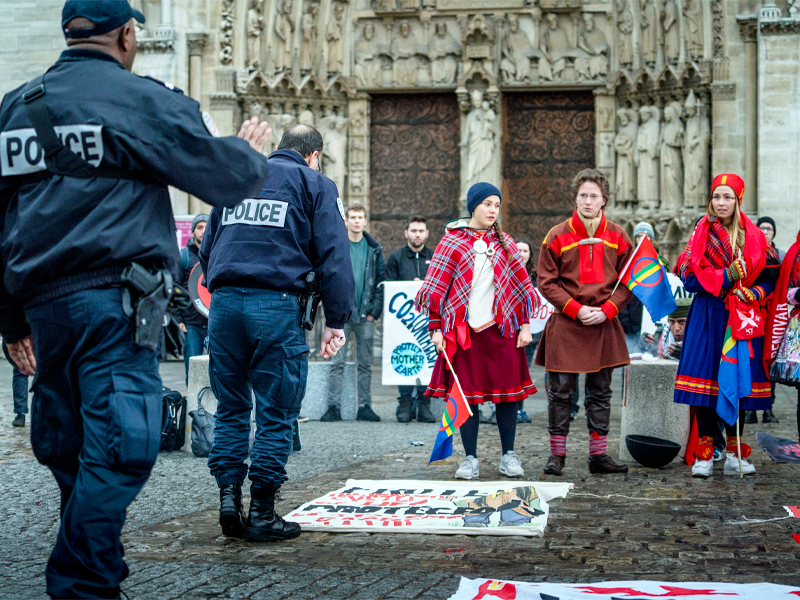
As an Indigenous activist advocating for my community in other countries, the experiences differ from the average visitor. Sightseeing is usually virtually nonexistent unless the points of interest happen to be the actual target in order to amplify our message. Having been personally banned from most Parisian attractions from the Eiffel Tower to Notre Dame was an experience I attribute to my ancestors experiences as well.
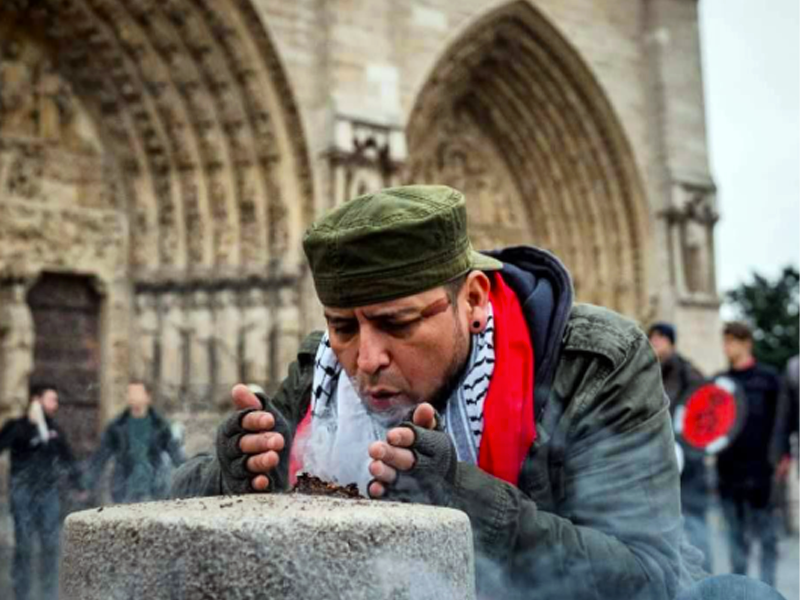
No sleep has ever been lost being banned from colonial landmarks however I would come to experience that these locations of interest were very much on high alert after recent terror attacks. Therefore, even cardboard Indigenous arrows and spray paint cans were enough to warrant being surrounded by a dozen military personnel with assault rifles making permanent decisions on my behalf.
That being said, I have always preferred exploring off-the-beaten paths anyway. It is only in the alleys and streets where societal change is made, unpermitted. So I made sure to add my own late-night contributions to the collections of Paris.
Comments are closed.